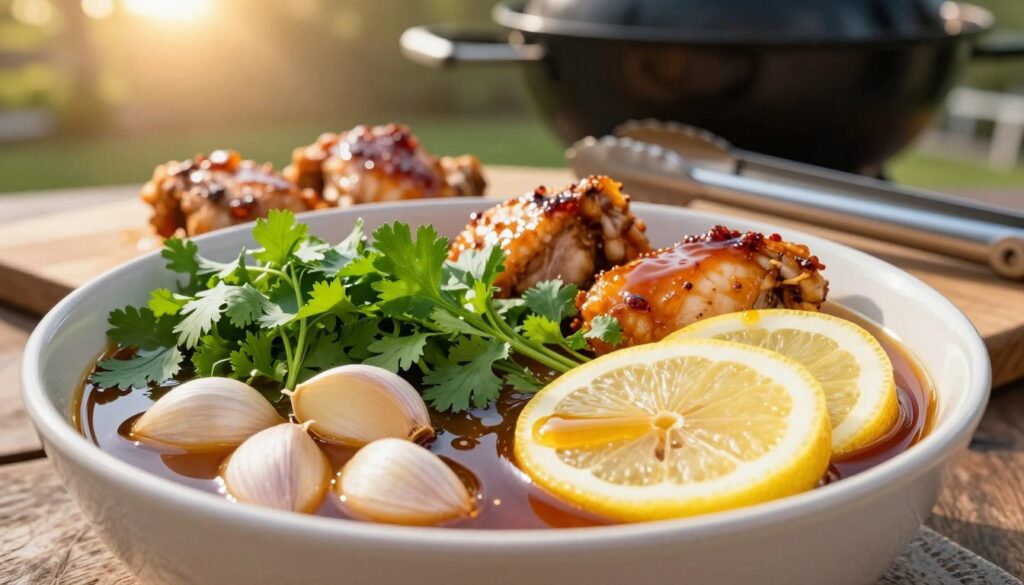
Get ready to lift your next grilled chicken to new heights. This friendly intro shows how a simple blend of orange juice and brown sugar brings natural sweetness, while soy sauce and balsamic vinegar add savory depth. The balance between sweet and salty creates a sauce that highlights every bite.
BBQ Marinade Recipe for Juicy Chicken
Preparing the mix the night before saves time and deepens flavor. When you let the chicken rest in the fridge, the chicken marinade has time to penetrate the meat. That makes grilling easier and tastier.
With a little prep and the right time on the grill, you can serve a crowd-pleasing summer meal. This post guides you through simple steps so your family enjoys a well-balanced plate.
Key Takeaways
Use orange juice and brown sugar to add natural sweetness.
Include soy sauce and balsamic vinegar for savory notes.
Marinate overnight when possible to boost flavor.
Prep ahead to save time on the day you grill.
This chicken recipe works great for backyard gatherings.
Why This BBQ Marinade Recipe for Juicy Chicken Works
The real trick is using the mix as both marinade and basting sauce so the meat develops a deep, country-style glaze.
This chicken marinade blends sweet and savory elements that caramelize neatly over heat. That caramel layer locks moisture and builds a glossy coating that tastes familiar and comforting.
Use the same liquid to baste while grilling, and each piece gets an even, sticky finish. Friends often call it a country-style delight because it hits nostalgic flavor notes that people love.
The sugar and acids caramelize, adding crisp edges and depth.
It doubles as a sauce so you don’t need a separate glaze step.
It’s versatile—adjust sweetness, heat, or tang to match your taste.
Action
Effect
Why it helps
Marinate overnight
Deeper flavor
Allows the mix to penetrate the meat fibers
Baste during cooking
Shiny, sticky glaze
Builds layers that caramelize on contact with heat
Adjust sugar/acid
Custom flavor
Matches regional or personal taste preferences
Essential Ingredients for Your Marinade
Gather a few simple ingredients and you’ll have a versatile base that highlights smoky, roasted notes. Use these pantry staples to make a reliable sauce that works with many cuts of chicken.
Pantry Staples
Start in a large mixing bowl: combine 1 cup of orange juice and 1 cup of brown sugar. This gives the sweet backbone that caramelizes on the grill.
Add 1/2 cup of soy sauce and 1/2 cup of balsamic vinegar to bring savory depth and bright acidity. Mix in 2 tablespoons of olive oil and a dash of lemon juice to improve texture and lift the flavor.
Customizing Your Flavor
Stir in 2 tablespoons of minced garlic and 1 tablespoon of garlic powder to boost aroma. These ingredients are pantry-friendly and easy to tweak.
Want more tang? Swap a little balsamic for apple cider vinegar.
Love smoky notes? Add smoked paprika or a touch of liquid smoke.
Prefer sweeter glaze? Increase the brown sugar by a quarter cup.
Tip: Combine everything in the bowl, taste, then adjust. This simple method makes a dependable chicken marinade you can scale up or down.
Quick Tips for Flavorful Results
A few focused techniques help you avoid burned sauce and dry meat.
Always reserve a portion of your marinade before adding raw chicken. Use that clean portion to baste so you avoid cross-contamination and keep flavors bright.
Keep your grill at medium heat. That prevents the sugars in your BBQ sauce from burning and lets the meat cook through evenly.
Set aside enough time to let the meat rest after cooking; resting preserves moisture and tenderness.
Add a squeeze of fresh lemon to the mix to lift the flavor and balance sweetness.
Baste several times during cooking to build a glossy finish—about 2–3 basting passes in the last 10 minutes works well.
If you grill for a crowd, stagger pieces and manage zones so each cut gets steady heat without flare-ups.
Follow these simple tips and your next grilling session will yield consistent, tasty results every single time.
Preparing Your Chicken for the Grill
Proper prep sets the stage; a few smart trims and even thickness make grilling simple and reliable.
Start by rinsing each piece in cold water and patting it dry. This helps the chicken marinade adhere and reduces excess moisture.
Choosing the Right Cut
Bone-in, skin-on thighs are forgiving and add rich flavor as the fat renders during cooking. Trim any loose skin or excess fat to improve texture and prevent flare-ups.
If you use chicken breasts, pound them to an even thickness so they finish at the same time. Drumsticks work too, but expect them to take more minutes on the grill than boneless breast pieces.
Remove stray fat and skin pieces before marinating.
Pound breasts for uniform cooking.
Let trimmed pieces sit briefly while you mix the sauce or marinade.
Good prep helps sauces penetrate the meat and gives you more consistent, flavorful results at the grill.
The Importance of Marinating Time
How long you let the chicken sit in the mix has as much impact as the ingredients themselves. Short soaks help, but true depth comes with patience.
At minimum, aim for 30 minutes. That gives the surface a chance to pick up sweet and savory notes and prevents bland bites.
If you can, leave pieces in the fridge overnight. After several hours the acids and sugars begin to tenderize the protein. That creates a softer texture and better overall flavor when you cook.
Try at least 30 minutes; 3 hours is a solid quick option.
Overnight in the fridge yields the deepest taste and most tender results.
Thighs respond especially well—chicken thighs benefit from longer soaks.
Keep a reserved portion of sauce aside to baste later so you avoid cross-contamination. Proper timing makes your grilled chicken more flavorful and helps the protein reach its best texture.
Setting Up Your Grill for Success
Preparing two heat zones lets you manage temperature like a pro while you cook. A clear plan for direct and indirect heat helps you avoid flare-ups and uneven doneness.
A beautiful outdoor grill setup, prominently featuring a sleek charcoal grill, glowing with warm embers and surrounded by an array of fresh ingredients for BBQ chicken marinating. In the foreground, a wooden table displays colorful spices, a cutting board with chopped herbs, and marinated chicken pieces soaking in a vibrant sauce, all artfully arranged. The middle ground showcases the grill with smoke gently wafting upward, indicating heat and flavor. The background features a lush green lawn, a few trees, and a clear blue sky, creating a bright and inviting atmosphere. Soft, natural lighting enhances the warmth of the scene, capturing the essence of a fun and friendly cooking experience. This image embodies the spirit of summer grilling and delicious flavors, perfect for SajidCooks.com
Gas Grill Setup
On a gas unit, turn burners on only one side to create dual-zone heat. Leave the opposite side off to form an indirect area.
Start your chicken thighs on the cool side so they cook through without burning the skin.
Brush grates with a little olive oil to prevent sticking.
Move pieces to direct heat for the final minutes to get a char.
Charcoal Grill Setup
Pile coals to one side to form hot and cool zones. That gives you control of searing and gentle cooking.
Position the lid with vents above the chicken to keep hot air circulating and even the heat.
Use the indirect side for most of the cook; finish on direct heat for color.
Keep a spray bottle handy to tame flare-ups and protect the sauce.
Mastering this setup ensures your grilling runs smoothly and your meat stays tender and well browned.
Step by Step Grilling Instructions
Lay the marinated thighs on the cool side of your grill to begin a gentle, even cook. Place each piece skin-side up on indirect heat.
Cook the thighs for about 20 minutes on that side. After 20 minutes, flip each thigh and start brushing with the reserved sauce.
Use a clean bowl to hold the reserved marinade or sauce. That keeps the basting liquid safe and bright while you cook.
Continue grilling, flipping and basting every few minutes until the internal temp reaches 175°F.
This method works well with drumsticks too—rotate them often to get an even char.
Brush generously in the final 6–10 minutes to build a glossy glaze without burning sugars.
Once done, remove the pieces from the grill and let them rest a few minutes before serving. These clear instructions help you manage heat, time, and flavor for great grilled results.
Mastering the Perfect Glaze
The secret to a showstopping glaze is steady brushing and quick flips over controlled heat. Follow a clear final-stage routine and you’ll get a glossy finish that tastes as good as it looks.
Grilled chicken glistening with a flavorful BBQ glaze, nestled on a rustic wooden cutting board. The chicken is perfectly charred, showcasing enticing grill marks, with vibrant herbs scattered around. In the foreground, a small bowl filled with tangy, rich marinade complements the dish. Soft, warm lighting bathes the scene, enhancing the rich golden-brown tones of the chicken and creating inviting shadows. The background features a blurred outdoor BBQ grill, subtly hinting at the cooking process, evoking a warm, summer atmosphere. The composition is shot from a slightly elevated angle to capture the texture and juiciness of the chicken while maintaining focus on the inviting glaze, embodying culinary mastery. Perfect for SajidCooks.
Avoiding Flareups
Reserve a clean portion of your sauce before you add raw pieces. Use that reserved liquid during the last few minutes on the grill so flavors stay bright and safe.
Brush the reserved chicken marinade on during the final 6–10 minutes to build layers.
Be cautious when applying bbq sauce over direct flame—sugars can spark sudden flareups.
Flip pieces often and add a fresh thin coat each time to form a shiny, sticky glaze.
When the char looks right, move the meat to a clean plate and let it rest a few minutes before serving.
A thick, glossy glaze should deliver a burst of concentrated flavor that complements smoky notes from the grill. Master this step and your grilling will have a pro-level finish every time.
Why Resting Your Meat Matters
A short pause off the heat transforms hot, tight meat into a tender, sliceable serving.
Resting your grilled chicken for 5–10 minutes after it comes off the grill is the single most important step to keep the final texture soft and moist.
When you let the protein sit on a plate, internal juices redistribute. That prevents them from running out when you cut into the pieces.
Cover the bird loosely with foil while it rests to trap gentle heat and keep the pieces warm on the side before plating.
Rest 5–10 minutes to lock in moisture and improve tenderness.
Cover loosely with foil so steam preserves warmth without steaming the skin.
Whether you have chicken breasts or thighs, this pause matters—don’t slice too soon.
Use the saved resting time to finish a sauce or toss a quick side.
A quick set of practical notes will help you finish strong and avoid common mistakes.
Safety and timing matter as much as flavor. Follow these checkpoints to protect quality and taste.
Internal Temperature Guidelines
For safe eating, make sure each chicken breast reaches 165°F on an instant-read thermometer.
This temp keeps meat tender while killing harmful bacteria. Check thickest parts and near the bone.
Food Safety Practices
Keep raw pieces away from other ingredients until you start grilling.
Reserve a clean cup of sauce before adding raw meat so you can baste safely.
Use fresh garlic and garlic powder in your mix to boost flavor and aroma.
Storage and Leftovers
Store cooked portions in the fridge and eat within 3 days. Chill in shallow containers to cool faster.
If you have extra bbq sauce, keep it sealed for a few hours before using it as a dip or finish.
Conclusion
,Finish strong by trusting the process: good ingredients, careful heat, and a short rest yield the best results. This recipe and its marinade give you a reliable path to bold, balanced flavor.
Follow the clear instructions and simple tips in this post. Use quality juice and pantry staples, baste in the last minutes, and keep an eye on temperature to avoid burnt sugar.
Rest the meat briefly, then pack leftovers safely. Check the notes on storage so your servings stay fresh through the week.
Thanks for trying this chicken recipe. We hope it boosts your backyard cookout confidence—share how it turned out in the comments.
FAQ
How long should you marinate chicken pieces for the best flavor?
Aim for 30 minutes to 2 hours for breasts and up to 6 hours for thighs or drumsticks. Acidic ingredients like lemon juice or vinegar speed up flavor absorption, so avoid marinating delicate breasts for more than 3 hours to prevent a mushy texture. Always refrigerate while marinating.
Can you use this mixture on bone-in cuts like drumsticks and thighs?
Yes. Bone-in pieces handle longer marinating and slower cooking well. The blend of oil, acid, and seasonings helps both flavor and moisture. Increase marinating time to allow deeper penetration, and use indirect heat when grilling thicker cuts to cook through without charring.
What pantry staples should you have on hand to make the sauce?
Keep olive oil, soy sauce, brown sugar or honey, garlic (fresh or powder), salt, black pepper, and a splash of vinegar or lemon juice. These basics create balance: fat for moisture, acid for tenderizing, and salt plus sugar for flavor and browning.
How do you customize the taste for more heat or sweetness?
For heat, add crushed red pepper, cayenne, or sriracha. For sweet notes, boost honey or brown sugar. Swap Worcestershire sauce for soy sauce to deepen umami, or add smoked paprika for a smoky profile. Adjust incrementally and taste before marinating.
What’s the best way to prep chicken breasts before marinating?
Pat them dry, trim excess fat, and pound thicker areas to an even thickness so they cook uniformly. Light scoring or small slits helps the mixture penetrate. Place pieces in a shallow dish or resealable bag for even coating.
Should you oil the grill grates, and how do you prevent sticking?
Yes—oil grates lightly before preheating. Use a high-smoke-point oil like canola. Brush the oil on with a folded towel held by tongs. Also, let the meat sear without moving it for a few minutes to develop a natural release before flipping.
How long do you cook chicken breasts and thighs on the grill?
Over medium-high heat, grill boneless breasts 6–8 minutes per side depending on thickness. Boneless thighs need about 5–7 minutes per side. Bone-in pieces require indirect heat and 30–40 minutes total, turning occasionally. Always check internal temperature.
What internal temperature should you reach for safe, juicy chicken?
Cook poultry to 165°F (74°C) measured at the thickest part with an instant-read thermometer. For thighs, you can go slightly higher for tenderness, but 165°F is the safe minimum. Insert the probe away from bone for accurate readings.
When should you apply glaze or sauce during grilling?
Brush on sauces that contain sugar during the last 5–10 minutes of cooking to avoid burning. If you want multiple layers, apply thin coats and let each set before adding the next. Reserve a portion of sauce before it contacts raw meat if you plan to use it as a finishing dip.
How long should you rest grilled chicken before serving?
Rest chicken 5–10 minutes after grilling. Resting lets juices redistribute, keeps the meat moist, and makes slicing neater. Tent loosely with foil to retain warmth without steaming the crust.
What food safety steps should you follow with marinades and leftovers?
Discard or boil any marinade that touched raw meat before using as a sauce. Store cooked leftovers in airtight containers in the fridge within two hours and use within 3–4 days. Reheat to at least 165°F before eating.
Can you marinate the night before, and will that improve flavor?
Yes—overnight (up to 12 hours) in the fridge works well for larger pieces and deeper flavor. Keep acidic ingredients moderate to avoid over-tenderizing. Overnight marinating is great when planning ahead for a weekend cookout.
How do you avoid flareups when grilling sauced chicken?
Use indirect heat for thicker cuts and move pieces away from direct flames if flareups occur. Trim excess fat, keep a spray bottle of water nearby for small flames, and apply sugary sauces late in cooking to minimize burning.
Is it okay to use olive oil in the mixture if you plan high-heat grilling?
Use a light olive oil sparingly or choose a higher smoke-point oil like avocado or canola if you’ll grill at very high heat. Oil helps transfer flavors and prevents sticking, but heavy smoking can change the taste if the oil burns.
friendly intro shows how a simple blend of orange juice and brown sugar brings natural sweetness, while soy sauce and balsamic vinegar add savory depth. The balance between sweet and salty creates a sauce that highlights every bite.
Ingredients for BBQ Marinade
1kg Chicken (Cut into medium pieces)
1cup Yogurt (Plain, thick)
2tbsp Ginger Garlic Paste (Freshly made for best taste)
1tsp Red Chili Powder (Adjust to taste)
½tsp Turmeric Powder (For color & flavor)
1tsp Garam Masala (Optional for aroma)
½tsp Cumin Powder (Optional)
To taste– Salt (–)
½tsp Black Pepper (Optional)
2tbsp Lemon Juice (Freshly squeezed)
2tbsp Oil (Any cooking oil)
Instructions
1
Step by Step Grilling Instructions
Lay the marinated thighs on the cool side of your grill to begin a gentle, even cook. Place each piece skin-side up on indirect heat.
Cook the thighs for about 20 minutes on that side. After 20 minutes, flip each thigh and start brushing with the reserved sauce.
Use a clean bowl to hold the reserved marinade or sauce. That keeps the basting liquid safe and bright while you cook.
Continue grilling, flipping and basting every few minutes until the internal temp reaches 175°F.
This method works well with drumsticks too—rotate them often to get an even char.
Brush generously in the final 6–10 minutes to build a glossy glaze without burning sugars.
2
Mastering the Perfect Glaze
The secret to a showstopping glaze is steady brushing and quick flips over controlled heat. Follow a clear final-stage routine and you’ll get a glossy finish that tastes as good as it looks.
3
Avoiding Flareups
Reserve a clean portion of your sauce before you add raw pieces. Use that reserved liquid during the last few minutes on the grill so flavors stay bright and safe.
Brush the reserved chicken marinade on during the final 6–10 minutes to build layers.
Be cautious when applying bbq sauce over direct flame—sugars can spark sudden flareups.
Flip pieces often and add a fresh thin coat each time to form a shiny, sticky glaze.
When the char looks right, move the meat to a clean plate and let it rest a few minutes before serving.
A thick, glossy glaze should deliver a burst of concentrated flavor that complements smoky notes from the grill. Master this step and your grilling will have a pro-level finish every time.
Nutrition Facts
Servings 4
Serving Size 2 tablespoons marinade
Amount Per Serving
Calories85kcal
% Daily Value *
Total Fat4g7%
Saturated Fat0.6g3%
Trans Fat0g
Cholesterol0mg
Sodium520mg22%
Potassium120mg4%
Total Carbohydrate10g4%
Dietary Fiber0.5g2%
Sugars8g
Protein1g2%
Vitamin A 150 IU
Vitamin C 6 mg
Calcium 20 mg
Iron 0.7 mg
Vitamin D 0 IU
Vitamin E 0.5 IU
Vitamin K 4 mcg
Thiamin 0.03 mg
Riboflavin 0.02 mg
Niacin 0.4 mg
Vitamin B6 0.05 mg
Folate 8 mcg
Vitamin B12 0 mcg
Biotin 1 mcg
Pantothenic Acid 0.2 mg
Phosphorus 25 mg
Iodine 2 mcg
Magnesium 10 mg
Zinc 0.2 mg
Selenium 1 mcg
Copper 0.05 mg
Manganese 0.1 mg
Chromium 0 mcg
Molybdenum 1 mcg
Chloride 15 mg
* Percent Daily Values are based on a 2,000 calorie diet. Your daily value may be higher or lower depending on your calorie needs.
Note
A quick set of practical notes will help you finish strong and avoid common mistakes.
Safety and timing matter as much as flavor. Follow these checkpoints to protect quality and taste.
Internal Temperature Guidelines
For safe eating, make sure each chicken breast reaches 165°F on an instant-read thermometer.
This temp keeps meat tender while killing harmful bacteria. Check thickest parts and near the bone.
Food Safety Practices
Keep raw pieces away from other ingredients until you start grilling.
Reserve a clean cup of sauce before adding raw meat so you can baste safely.
Use fresh garlic and garlic powder in your mix to boost flavor and aroma.
Storage and Leftovers
Store cooked portions in the fridge and eat within 3 days. Chill in shallow containers to cool faster.
If you have extra bbq sauce, keep it sealed for a few hours before using it as a dip or finish.
Keywords:
BBQ chicken recipe BBQ marinade Juicy chicken recipe Chicken BBQ at home Homemade BBQ chicken
Did you make this recipe?
Pin this recipe to share with your friends and followers.